
News
Immigration crackdowns tightening ag labor situation
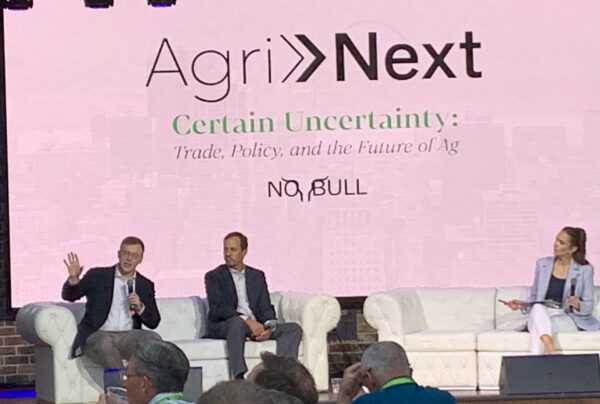
The lead economist for grains and oilseeds with CoBank says access to labor remains one of the largest uncertainties facing agriculture.
Tanner Ehmke says recent immigration crackdowns are creating an even tighter labor situation.
“So much of the labor supply is declining.” He says, “If you look at the numbers of border crossings, they’ve almost dropped to zero, which is great for the enforcement of U.S. law. Bad if you are in the business of agriculture and trying to find unskilled labor.”
He says many growers, especially fruit and vegetable producers, are pivoting to the H-2A and H-2B work visa programs.
“We’re absolutely going to see more H-2A.” He says, “You can’t find workers. Some workers are afraid of being deported, so they’re not showing up. So, they have got to go to these contractors, and they’re not cheap. But if you want to stay in business, you gotta have those workers picking the fruit, otherwise it’s going to rot.”
Ehmke says agriculture continues to implement automation as a solution where possible, but it takes time and money to develop.
“This raises the question for a lot of our borrowers about how to invest.” He says, “If you’re going to build a new processing plant in a rural area, how can you guarantee that it’s going to be staffed? So, automation is going to be obviously on the table with everything that our customers do.”
He says much of the country’s food production relies on a reliable workforce, so prolonged labor uncertainty can potentially impact supplies and drive prices higher.
Ehmke was a panelist at the recent 2025 AgriNext Conference in St. Louis.
If they are here illegally they should self deport and get in line to come back correctly. We should be able to control who is let in.