
News
Bayer: Genome editing and AI could accelerate the next generation of crop innovation
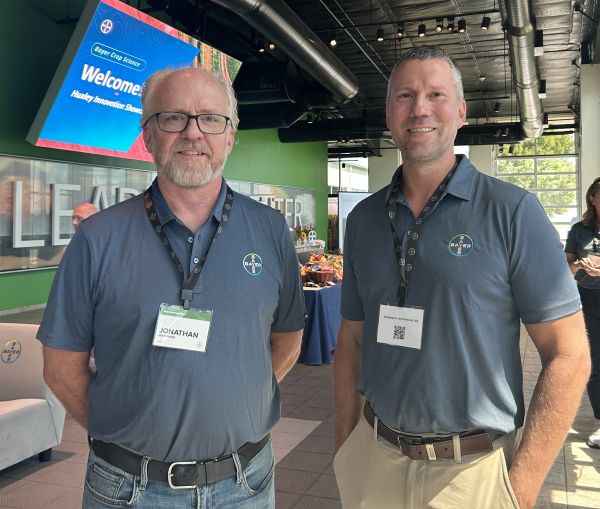
Bayer Crop Science is bringing together genome editing, plant breeding and artificial intelligence as it works to develop new crop products designed to help farmers manage an increasingly challenging environment.
At the recent Bayer Innovation Showcase in Huxley, Iowa, Brownfield spoke with Rick Lawrence, Head of Genome Editing Delivery in Plant Biotechnology, and Jonathan Jenkinson, Head of Product Design in the Breeding Organization at Bayer Crop Science, about the company’s work and what it could mean for farmers.
Lawrence says genome editing has the potential to provide faster solutions to some of the climate-related stresses farmers may face in the future -challenges that can be difficult to address using traditional breeding and biotechnology alone.
Jenkinson says Bayer’s pipeline is growing rapidly, with a focus on making more edits more quickly, improving the ability to identify which edits will work and developing processes that can be repeated consistently. He says the goal is a pipeline filled with edited products in 10 years or less.
The Bayer team also sees artificial intelligence as an important tool in shortening that timeline. Lawrence explains that decades of data on genes, genomes, seeds, phenotypes and traits can be combined with AI to identify patterns and opportunities that could take humans much longer to uncover.
Jenkinson says the ultimate goal is better understanding what farmers need so researchers can design products to address those needs.
Both researchers describe genome editing as a significant change in plant breeding—giving scientists greater ability to design the products they want to create rather than simply discovering what traditional breeding produces.
Listen to the full conversation with Rick Lawrence and Jonathan Jenkinson to hear more about Bayer’s genome-editing pipeline, the role of AI and what the technology could mean for the future of crop production:
Add Comment