
News
Global sugar subsidies near $1.4 billion as U.S. producers seek Section 301 investigation
A new report finds direct foreign sugar subsidies have nearly doubled over the past two decades.
Director of the International Center for Agricultural Competitiveness Darren Hudson with Texas Tech University tells Brownfield, “There’s a group of countries, and some of them are quite large, India, China, that have very, very restrictive policies that have substantial impact on the global market.”
“You add to that some of these other smaller but still important producers that are heavily subsidized, it creates a really, really distorted view,” he explains.
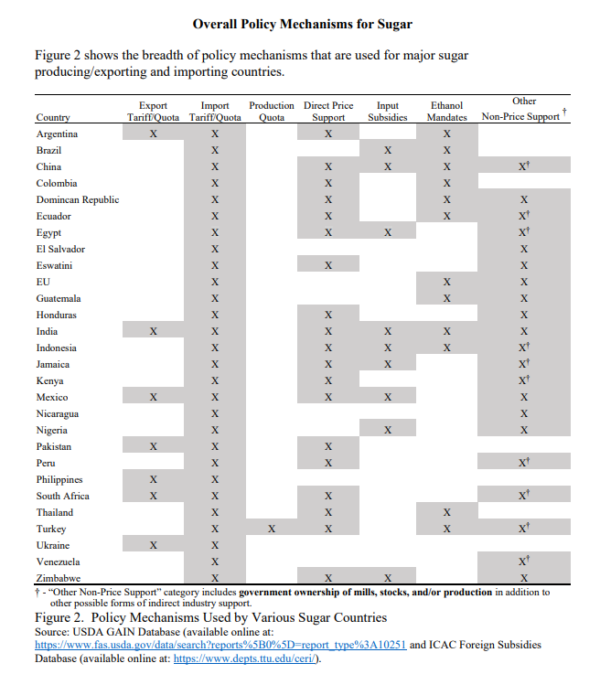
He says the nearly $1.4 billion in subsidies does not include additional government assistance like input subsidies, low-interest loans, debt forgiveness, and government ownership.
Hudson says ethanol mandates in countries such as Brazil also complicate foreign sugar policy.
“When you create that market by a policy incentive, then it creates all these other markets or other products, which then affects those byproducts and those secondary products in other markets where those are exported,” he says.
He says U.S. sugar policy supports a zero cost to taxpayers, which can limit policy solutions for farmers struggling to make a profit.
Rob Johansson with the American Sugar Alliance says farmers and manufacturers cannot fairly compete in a global market that rewards overproduction and leads to the dumping of surplus sugar.
The report will be used as part of the U.S. sugar industry’s call for a Section 301 investigation.
Add Comment